
Date.
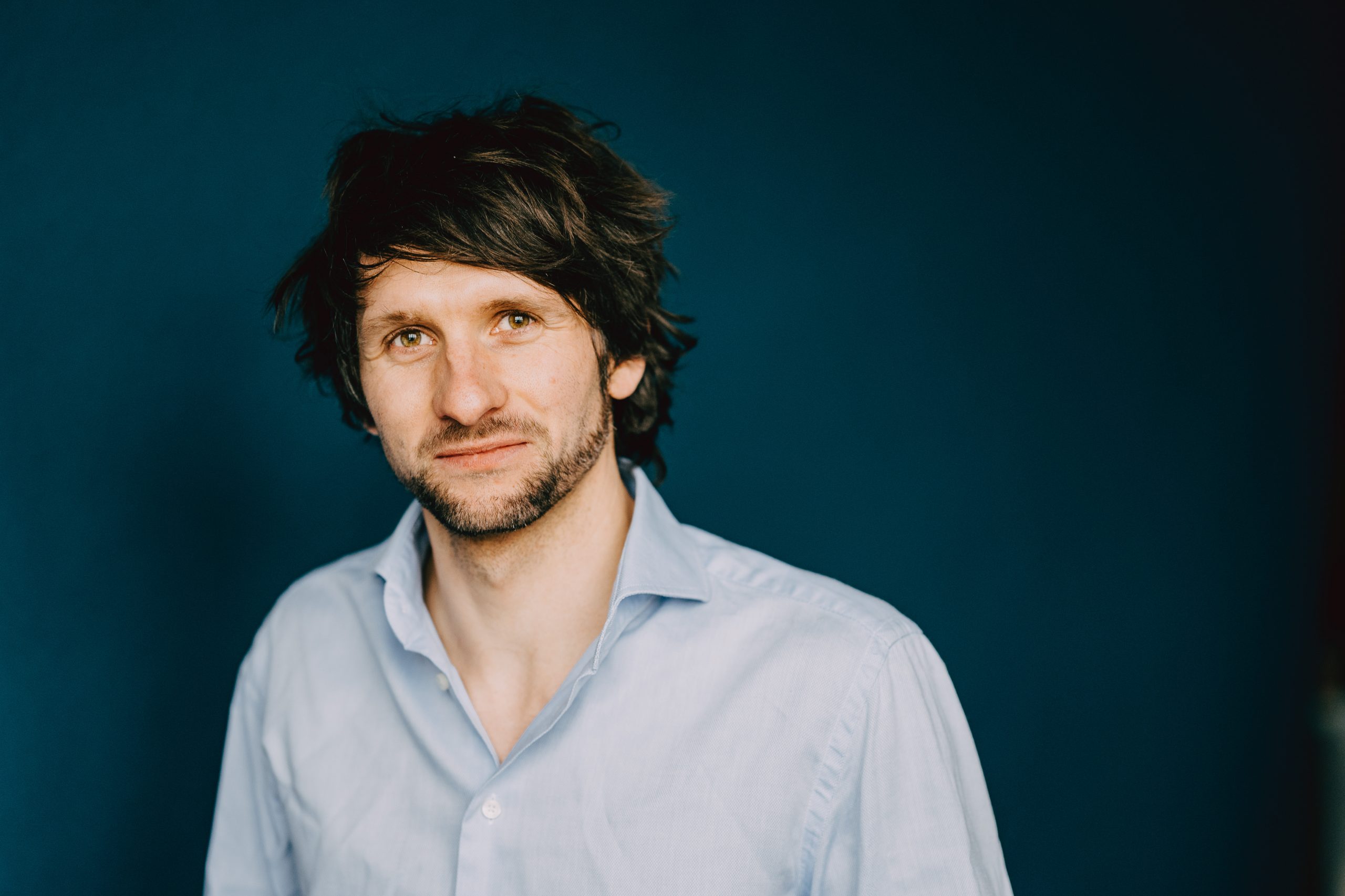
Dr. Thomas Dauser (Image: Dauser)
Congratulations to Dr. Thomas Dauser from Dr. Karl Remeis Observatory and Erlangen Centre for Astroparticle Physics (ECAP) at Friedrich-Alexander-Universität (FAU) who has received this year’s Innovation Award from the High Energy Astrophysics Division (HEAD) of the American Astronomical Society (AAS) together with Javier Garcia (NASA Goddard Space Flight Center, Greenbelt, USA, and Caltech) and Tim Kallman (NASA Goddard Space Flight Center).
This prestigious prize is awarded approximately every 18 months to recognize the development of innovative, fundamental or revolutionary instrumentation or software that has led to breakthrough results in high-energy astrophysics. This year, it rewards the development of novel models to describe the radiation from very high gravity regions of accreting compact objects such as black holes and neutron stars.
Dr. Dauser is a research scientist in X-ray astronomy, member of the X-IFU Consortium. The achievement honored with the Innovation Award relates to the development of software that enables astrophysicists to measure the properties of black holes using measurements in the X-ray range. This allows to test the theory of General Relativity.
As for the X-IFU specifically, this model describes relativistic reflection of hard X-rays at the inner accretion disk in strong gravity close to black holes. It is routinely used in observations of Active Galactic Nuclei (AGN), Black Hole Binary (BHB) and Neutron Star (NS) systems to infer the spin of the black hole, properties of the accretion disk such as density and ionization, and the location of the primary source of X-rays (relevant publications are Dauser+13, Garcia, Dauser+14). The X-IFU will routinely perform such measurements at a much shorter exposure than previously possible (due to the large Athena mirrors) and the micro-calorimeter energy resolution will improve the constraints of these parameters and disentangle the reflection signatures from the out-flowing wind features imprinted on the reflected spectrum (see, e.g., Barret, Cappi19).
Find out more: articles from Friedrich Alexander University of Erlangen-Nürnberg & the American Astronomical Society (AAS)

 LinkedIn
 X (ex-Twitter)
 Youtube